Teaching Plate A
Ideal for backyard apples & pears
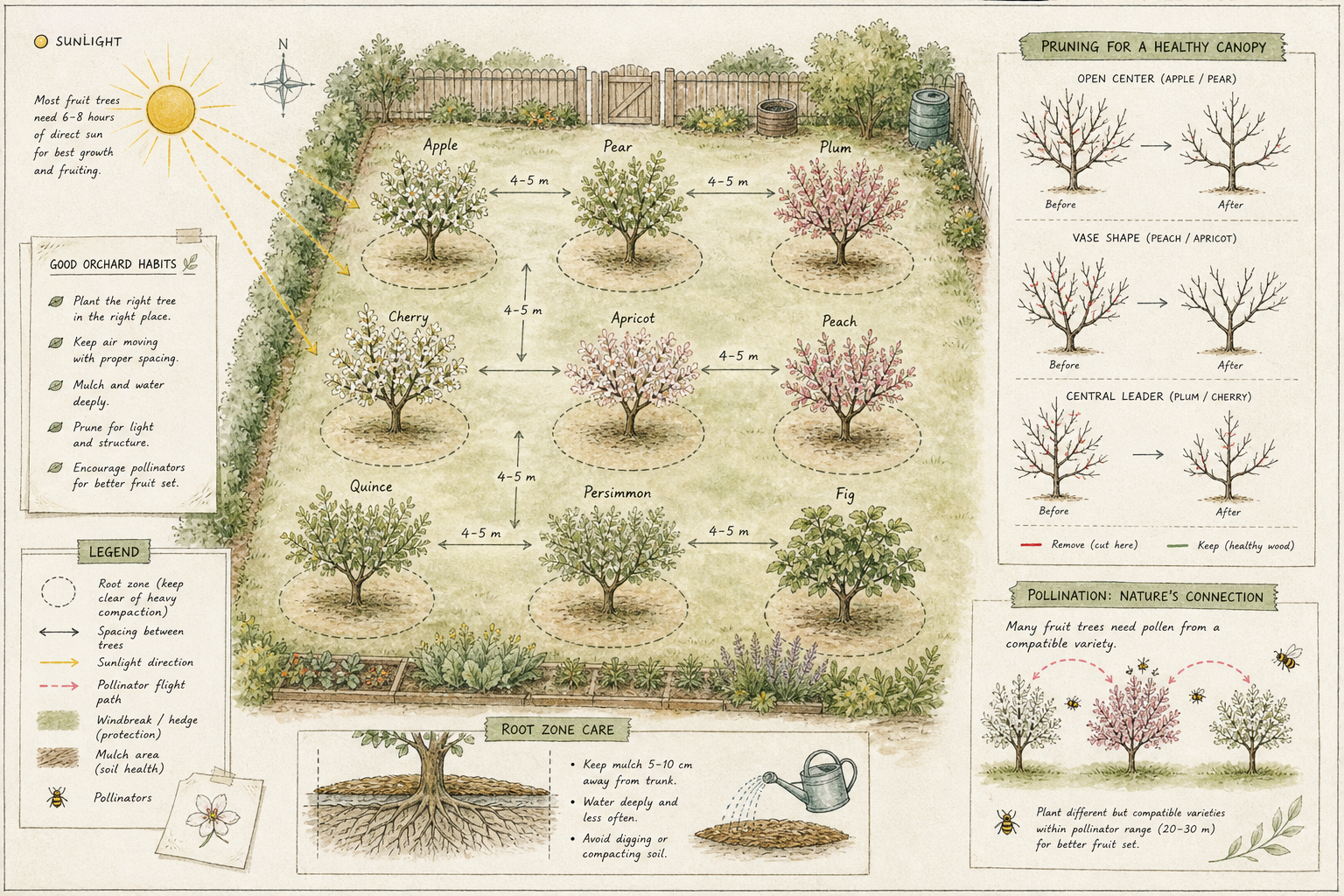
Morning sun line
Pollinator corridor
Root radius marker
Independent horticultural education
Practical orchard and home-garden guidance for soil, pruning, watering, pollination, and seasonal care—written to stay useful as a trusted reference through every growing cycle.
Field Guide Index
Pick a subject and jump to practical guidance without digging through long articles.
Quick reference to varieties, spacing, and harvest timing for home plots.
Follow simple routines for feeding, mulch refresh, and early stress checks.
Learn layout basics for rows, airflow, sunlight access, and shared pathways.
Use soil texture and drainage cues to choose amendments and planting depth.
Match cut timing and watering depth to season, tree age, and weather swings.
Understand bloom overlap and pollinator support for better fruit set rates.
Field Diagram Reference
Use this teaching plate to quickly read tree distance, canopy shape, root zone boundaries, and bee travel lines before planting.
Seasonal reference
Start with orchard diagrams, then return here through the year for practical timing reminders before moving into detailed checklists.
Focus: prepare beds early and plant young trees when soil is workable and roots stay moist.
Focus: keep moisture steady and reduce stress so fruit sizing and leaf health remain consistent.
Focus: finish harvest cleanly and rebuild orchard soil before winter rains and colder nights.
Focus: protect dormant trees, inspect branch structure, and set calm priorities for late-winter pruning.
| Season | Priority tasks | Check rhythm |
|---|---|---|
| Early spring | Dormant pruning, compost top-dress, bud inspection | Weekly walk-through |
| Late spring | Flower observation, pollinator support, weed control | Every 4–5 days |
| Summer | Deep watering, mulch refresh, fruit load checks | 2× per week |
| Autumn | Harvest timing, sanitation, trunk protection prep | Weekly + post-harvest |
Growing FAQ
Quick, practical guidance for beginner growers—clear steps you can return to through the seasons.
About the project
This website is an independent, non-commercial educational website focused on agriculture, fruit cultivation, gardening, and farming knowledge.
The website is not affiliated with, associated with, sponsored by, endorsed by, or authorized by any company, organization, or trademark owner with a similar or identical name.
The website does not sell products or services, accept payments, conduct commercial transactions, or operate for profit. All content is provided solely for educational and knowledge-sharing purposes.
The website and domain name are not offered for sale, lease, transfer, or other commercial transaction.
For communication regarding this website, please contact only:
This website has not authorized any third party, individual, company, or organization to represent the website, manage communications on its behalf, or conduct transactions related to it.
Communications through other channels are not authorized.